Is Private Credit a Risk for Financial Stability?

IEP@BU

From a prudential and welfare perspective, the judgment on private credit is mixed. On the one hand, it fills a gap between retail bank financing to SMEs, mainly provided by banks, and wholesale public markets, reserved for large listed corporates. On the other hand, private credit becomes a problem if it practices regulatory arbitrage to elude prudential safeguards

The following is an excerpt from the written evidence that Ignazio Angeloni provided to the UK House of Lords Financial Services Regulation Committee on the topic of Private markets and financial stability.

You can read the full document here

Read on IEP@BU >>

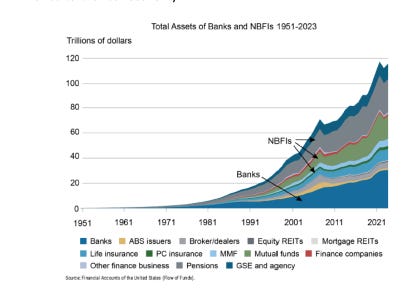
In recent decades, especially after the Great Financial Crisis of 2008-2009 (GFC), segments of financial intermediation have increasingly shifted outside the banking sector, towards the so-called non-bank financial institutions (NBFIs).

NBFIs are a heterogeneous collection of financial institutions comprising insurance companies, pension and mutual funds, broker-dealers, private equity and private credit funds, financial companies, special-purpose vehicles, etc.

This transition has been massive in the US but significant in Europe and other areas as well.

Some entities within the NBFI universe have started performing functions previously reserved to banks, direct lending being one of them, hence acquiring greater importance in providing finance to the real economy.
Source: Acharya et al. (2024)
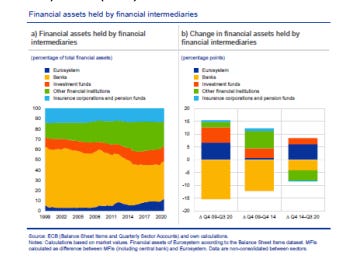
Source: ECB (2021)

Several reasons are behind this phenomenon.

One has been the tighter regulation imposed on banks after the GFC, with higher capital and liquidity requirements imposed especially on large systemic banks.

Another reason is population ageing, which increases the demand for pension and insurance products, hence channelled a growing flow of funds to the NBFI sector; private credit, to which we will turn in a moment, is partly financed by insurance companies.

Finally, another driver has been the long period of ultra-low interest rates, which rendered bank intermediation less profitable and led investors to search for more attractive returns outside the banking sector.

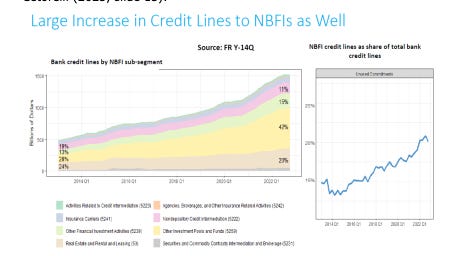
NBFIs and their interconnections with the banking sector have increased in tandem, taking many forms. Acharya et al (2024) report estimates of the interconnections among the components of the NBFI sector. Bank credit exposures to NBFIs have increase steadily, see chart below from Cetorelli (2025, slide 13).
Source: Cetorelli (2025)

Banks are the main providers of liquidity and short-term finance to insurance companies and other non-financial intermediaries.

Moreover, banks own large stakes in the asset management sector, implying that they suffer financially if NBFIs, which are part of their group, get into trouble even if incorporated separately.

In some cases, banks may feel a reputational responsibility towards non-bank entities they are associated with.

Conversely, NBFIs maintain their liquid balances with banks and contribute to funding them also in different ways, e.g., by holding bonds and subordinated capital instruments. NBFIs are also users bank services; for example, to transact in their behalf if they do not have direct access to central counterparties (CCPs). Therefore, interrelations run both ways.

In Europe, bank exposures to NBFIs are more limited so far. Data reported by the Basel Committee on Banking Supervision (2025) show that bank funding of NBFIs in Europe has stood at just below 10% of total balance sheets in recent years, whereas funding provided by NBFIs to banks stood at around 15%.

However, it must be considered that these are average figures; bilateral exposures can be significantly higher, as they are highly concentrated in a few large GSIBs (Globally Systemic Important Banks).

Private credit

Private credit is a particular manifestation of this general phenomenon, of growing importance in recent times. It consists of a diversified class of non-bank intermediaries – insurance companies, hedge funds, pension funds, venture capital and private equity funds, Business Development Companies (BDCs), etc – providing debt finance to nonfinancial businesses. Private debts are not publicly traded and are typically bespoke: covenants and returns are agreed bilaterally on a case-by-case basis.

Borrowers are typically mid-size businesses, between 100 mn and 1 bn US$ of annual revenue, too large for being funded by banks but too small to directly access public markets. Maturity is usually long (5 years or more), beyond that of average bank exposures but matching the investment horizon of certain NBFIs, particularly insurance and pension funds.

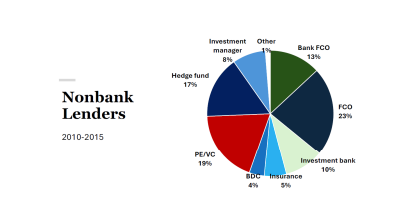
Data on the breakdown of private credit by instrument, originating institution, and ultimate investors are limited, which makes it difficult to assess the phenomenon. An estimate of the investor breakdown from Erel (2025), calculated on a sample of listed borrowers only, is shown below
Source: Erel (2025)

As one can see, the most important categories are hedge funds, private equity (PE) funds, Venture Capital (VC) funds, and financial companies, partly affiliated with banks.

Minor shares are represented by BDCs, specialized lenders required by US law to invest 70% of their assets in mid-size companies, insurance, and investment banks.

Private credit is one of the fastest-growing asset classes in recent years. Outstanding private credit is now estimated to be over 2 trillion US$ globally (IMF, 2024), of which about two thirds in the US. This is about eight times the size before the GFC. By comparison, total bank assets in the US today are about ten times as large as private credit.

Private credit has grown larger than leveraged loans and high-yield bonds, the other two main components of risky corporate debt.

In Europe, the phenomenon is much smaller but growing; assets under management of private credit funds in 2024 stood at €0.43 trillion, against €0.15 trillion euro in 2014. By comparison, private equity grew in the same period from €0.4 trillion to €1.2 trillion.

Private credits are riskier than bank loans or large syndicated loans, in particular because they have lower recovery rates after default, though default rates are lower.

It has been shown that the probability of borrowing from a non-bank rises sharply when a company’s profitability falls below zero, indicating that private debt collects fringes of credit markets that bank regulation excludes from traditional channels.

Gross returns are higher in private credit than in most other asset classes; however, analysis by Erel et al (2024) suggests that extra returns are just sufficient to compensate for risk and fees, so that risk-adjusted net abnormal returns for investors are indistinguishable from zero.

Haque et al. (2025) find that a large share of companies borrowing from private credit lenders also borrow from banks; the two forms of finance appear to be complementary and to serve different purposes: private lenders providing long-term investment-related financing, banks acting as liquidity providers by means of credit lines.

The synergy and the division of roles between the two functions is driven by tax and regulatory distortions, as well as organizational convenience.

In the US, private credit enjoys political support from the Trump administration; a recent presidential executive order instructs the Treasury and the Securities and Exchange Commission to “… consider ways to facilitate access to investments in alternative assets by participants in participant-directed defined-contribution retirement savings plans”. “Alternative assets” is a broad categorization of illiquid and non-publicly-traded assets, including private credit.

Benefits and risks from private credit

From a prudential and welfare perspective, the judgment on private credit is mixed. On the one hand, it is a valuable addition to financial markets, filling a gap between retail bank financing to SMEs, mainly provided by banks, and wholesale public markets (equity and debt), reserved to large listed corporates.

It also helps match the preferences of mid-market companies in terms of size, cost, and maturity of debt, with those of asset managers with longer horizons such as life insurers and pension funds.

On the other hand, private credit becomes a problem if it practices regulatory arbitrage to elude prudential safeguards, if it makes use of opaque instruments whose risks are hard to assess by investors and regulators, and if its links with the traditional financial sector give rise to contagion and systemic risks.

All three dangers are present at this moment, though the extent is difficult to assess due to a lack of data.

For these reasons, private credit justifiably attracts special scrutiny and attention by regulators and supervisors.

One reason for concern is that part of private credit is financed through opaque multilayered funding structures that make it difficult to understand the risk involved.

Typically, the originating company, an insurer or other asset manager, may issue Funding Agreement-Backed Notes (FABNs) to special purpose entities, whose funding instruments are in turn subscribed by a host of leveraged investors like hedge funds, banks, high-wealth individuals, and so on.

The funding chain may include Collateralized Loan Obligations (CLOs), securitized instruments obtained by repackaging and selling tranches of private credit assets. Funding may involve BDCs, closed-end funds which, as already mentioned, are required by law to invest at least 70% of their balance sheet in private assets issued by SMEs; BDCs fund themselves by issuing shares as well as debt.

Chernenko et al (2025) showed that BDCs are more capitalized than banks with similar risk profile; this makes for a lower solvency risk than if the corresponding credit were granted by banks.

However, the funding structure of this asset class is continuously evolving, as new instruments and intermediaries are introduced. Data reporting struggles to keep up with innovation; hence, regulators lack sufficient information to assess the risks involved. Four dimensions of risk, in particular are hard to appreciate.

First, leverage risk.

Whereas leverage may be limited for the immediate provider of private credit, for example a BDC, it is normally greater if the entire funding chain is considered. Lack of detailed information prevents accurate assessment of the effective leverage involved in the process leading to private credit disbursement.

The second dimension is rollover risk.

FABN are typically long-term and cannot be redeemed in advance, but maturities concentrate in certain years. If market stress occurs in those years, especially if some final borrower defaults, funding vehicles may be unable to meet their obligations.

Third, interconnection risk. As seen earlier, the funding chain includes virtually all entities in the financial markets, banks as well as NBFIs; its rich structure contributes diversification but also interconnection, which is a source of systemic risk.

Partial evidence for the euro area suggests that transmission of risk through the interconnection matrix is limited so far, but this can change quickly.

Finally, credit risk. The ultimate borrowers are not only riskier than the average corporate, but their liabilities, not publicly traded, are valued less timely and accurately. It is also worth noting that funding instruments such as FABN are not individually rated; investors rely on company ratings based on the insurer’s ability to meet its policy obligation, which is usually less demanding.

The above challenges should be addressed through a 2-pronged strategy:

1. Collecting adequate information and making is available to regulators and field supervisors, so that they can monitor the phenomenon in an accurate and timely way;

2. Regulating the phenomenon (without discouraging it, because, as we argued, private credit performs a useful function) according to the principle “same activity, same risk, same regulation”.

© Copyright
Back to the Beginning

IEP@BU

Read on IEP@BU >>

If someone had told us back then that the euro would retain its value in dollars 27 years later, we would have gladly signed on. But today, the world has changed — and the future is more open than ever

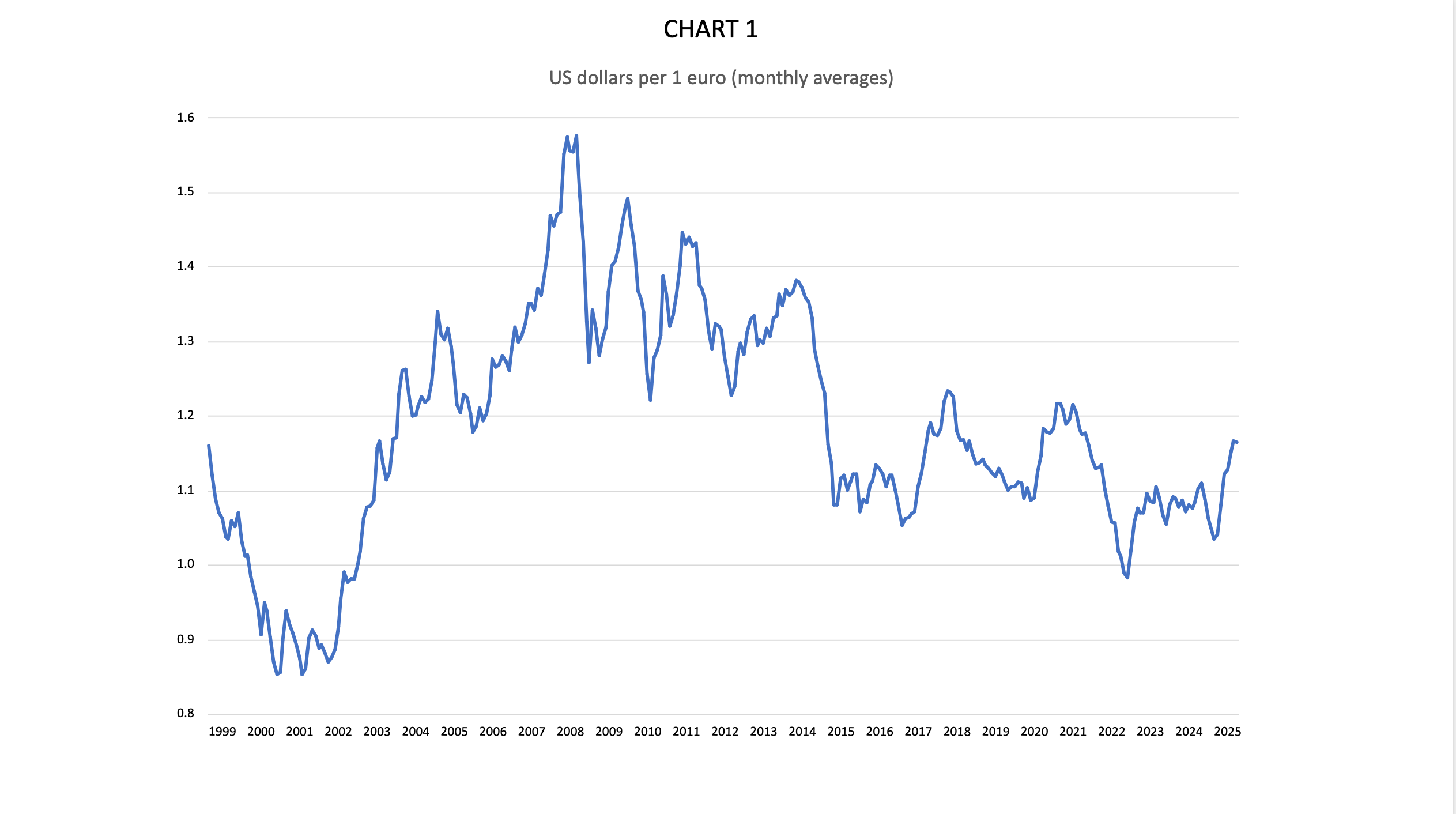
Foreign exchange markets have delivered a striking data point: the euro now trades at $1.17, exactly the same level as on January 4th, 1999 — the first day of the single currency’s existence. As if nothing had happened in between: not the twin financial crises on both sides of the Atlantic, not the digital revolution, let alone Covid, the crisis of globalisation, wars, or Donald Trump and his tariffs.

Are currency markets blind to reality — or is this merely coincidence, a chance equilibrium among opposing forces? Either way, it is a moment that invites reflection on the deeper forces driving this return to the origin.

The exchange rate, of course, has been anything but stable over these 27 years (Figure 1). The two years following the “changeover night” of January 1999 were dominated by fears that the untested euro would not withstand market pressures.

Uncertainty drove the euro down to just $0.85 in 2000. But the newcomer recovered quickly. The European economy was expanding, monetary stability was taking root, and the ECB was gaining credibility. On the eve of the financial crisis, one needed almost $1.60 to buy a euro.

After the crisis, the picture changed. The era of the strong dollar began, and by 2023 the US currency had climbed back above parity with the euro. With fluctuations along the way, that phase persisted until the arrival of the current occupant of the White House — who, without quite saying so, has declared war on a strong dollar. As recently as December, the euro traded at $1.04. Now it stands at $1.17, and no one can tell where it will go next, though the usual “experts” insist the trend will continue.

What explains these movements — and this apparent return to the starting line? Economists, who occasionally get things right, point to three broad factors.

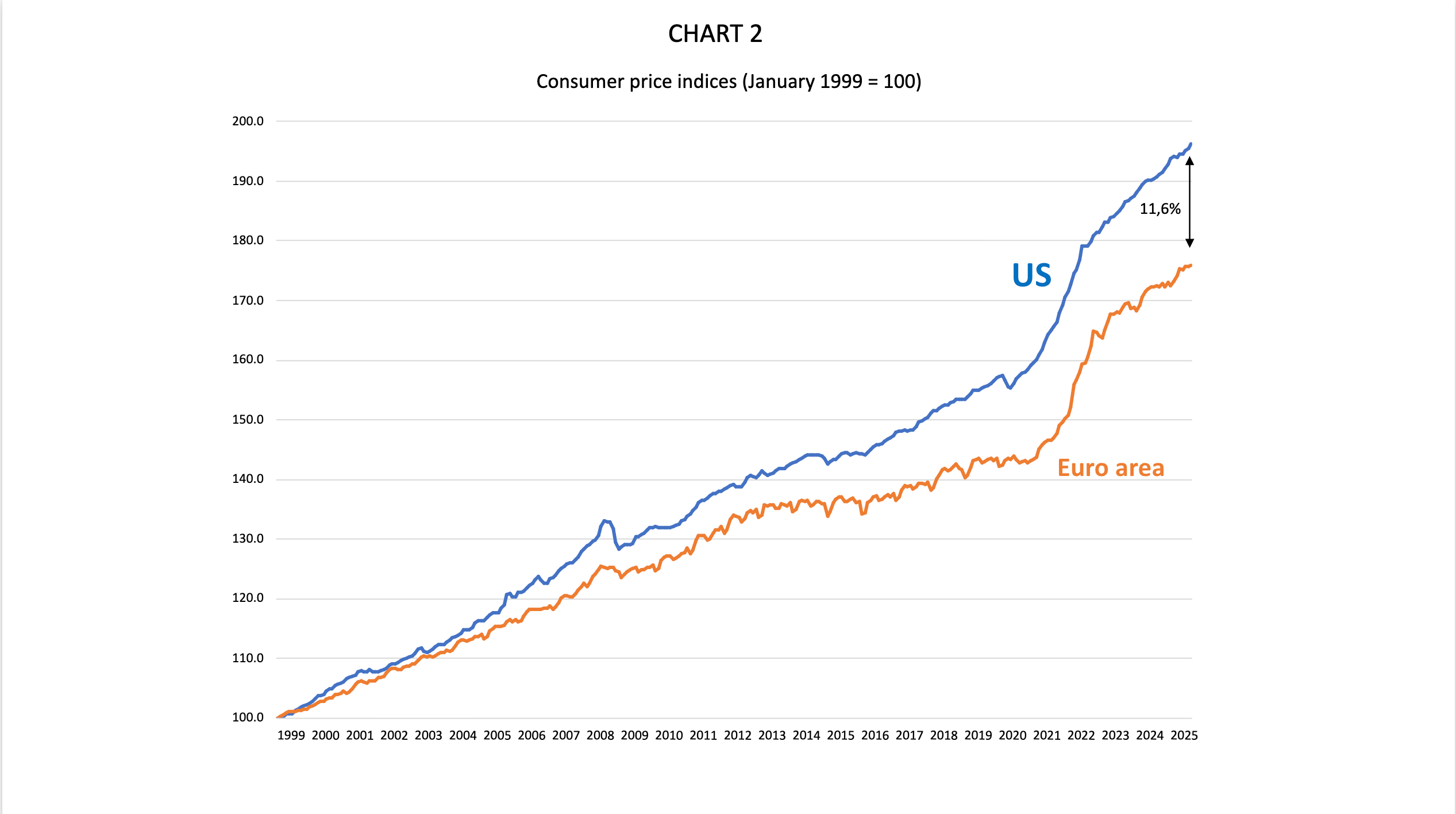
The first is inflation: a currency that loses value domestically will eventually lose value externally too. Since 1999, US inflation has been consistently higher than Europe’s. Consumer prices now diverge by 11.6% compared with January 1999 (Figure 2).

If purchasing-power parity were the only factor, the euro should today be worth $1.30, not $1.17. But there are two other drivers.

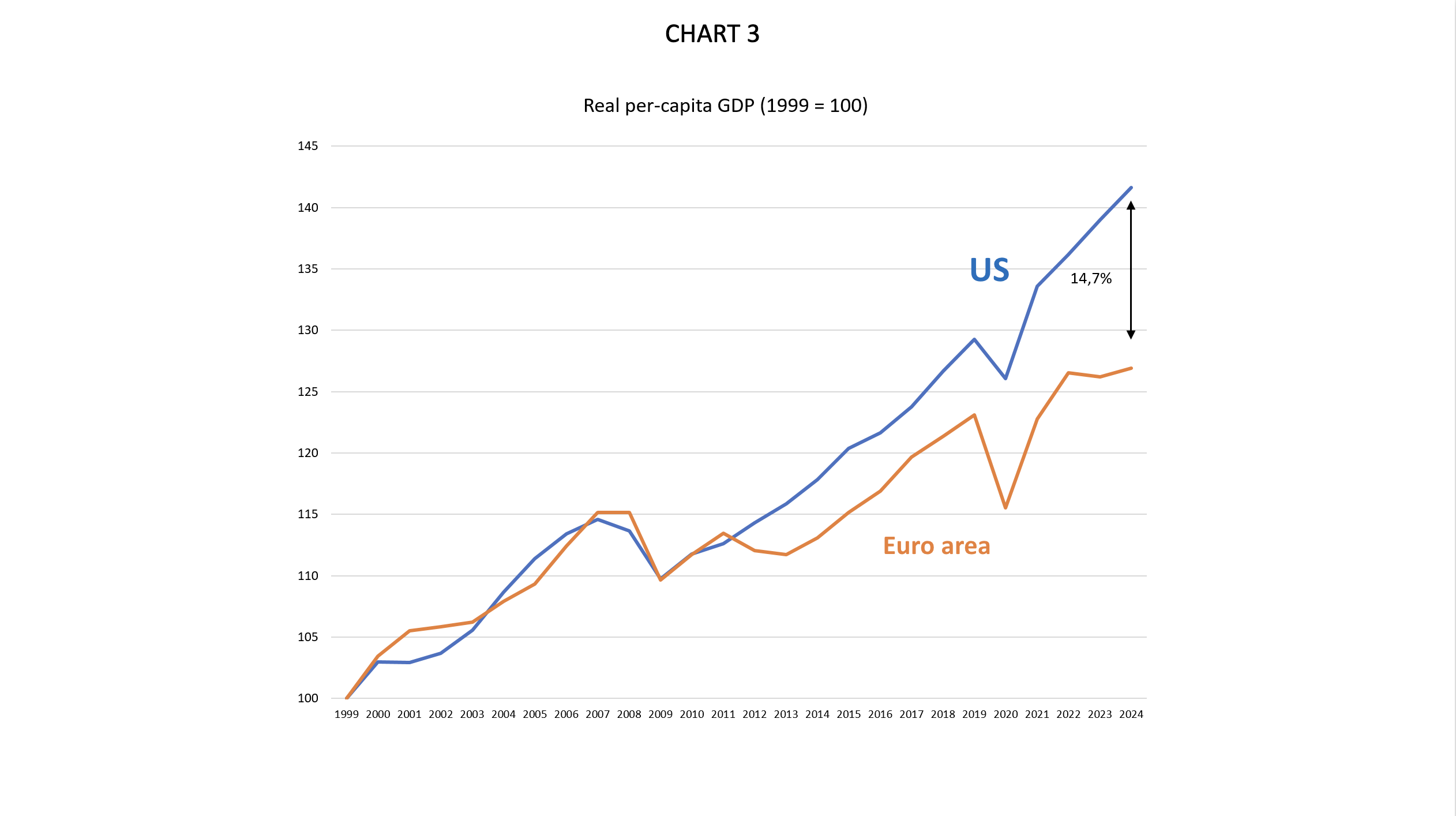
The second — perhaps the most important — is the strength of the underlying economy. An economy that grows, innovates and invests, that creates jobs and attracts capital, tends to sustain a stronger currency. On this front, the verdict favours the United States — but only since the crisis (Figure 3).

figura 3

In its first decade, the euro area kept pace in terms of real per capita income. The gap widened sharply after the sovereign debt crisis. Today, the accumulated divergence between the two economies stands at 14.7%. It is no coincidence that the dollar’s comeback began at precisely that moment.

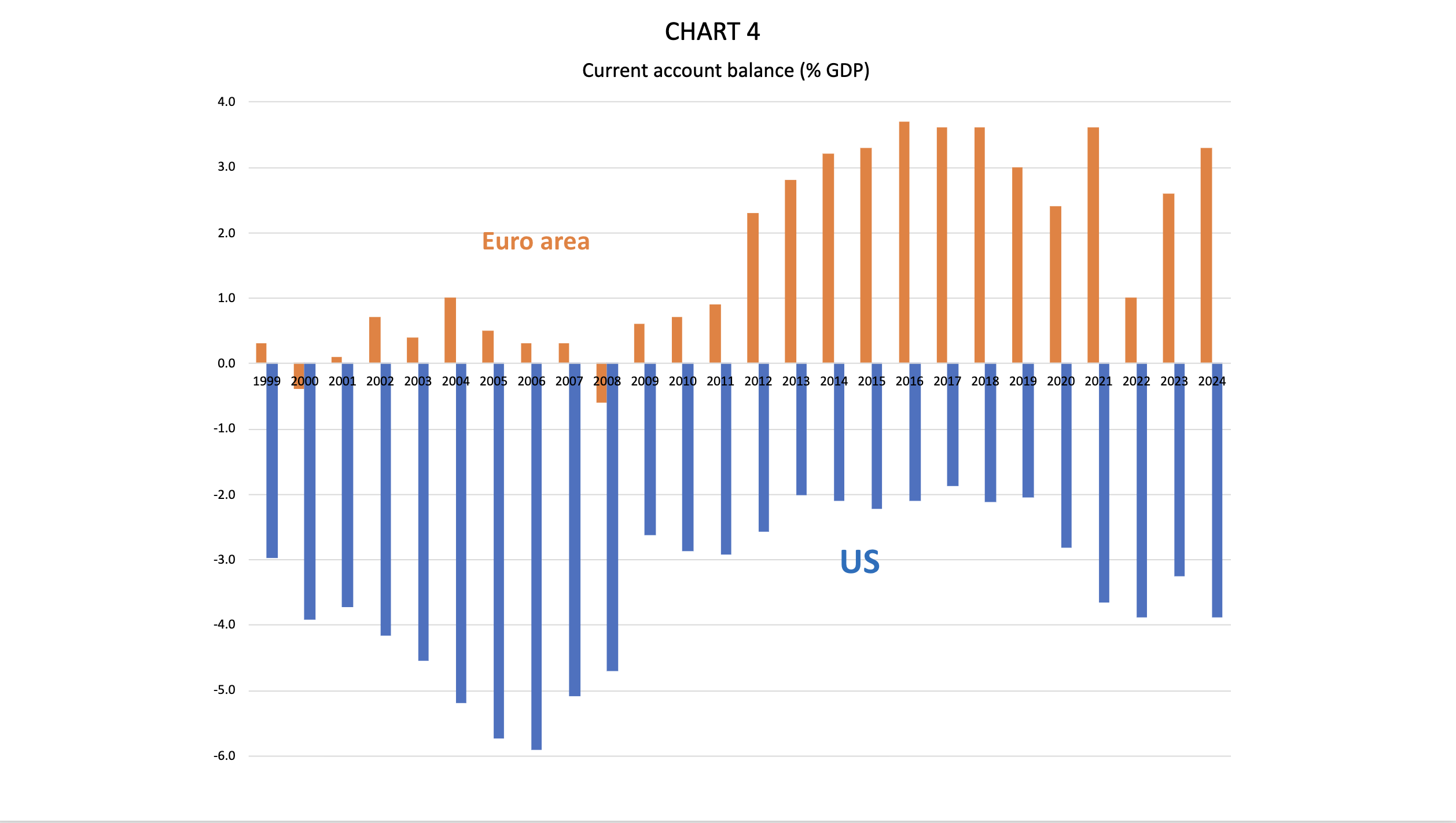
The third factor is external balance. A country running persistent current account deficits will tend to see its currency weaken, as imbalances correct and external payments are converted into foreign currencies. The United States’ chronic current account deficit has widened since the crisis, in contrast to the euro area, which moved from a rough balance to a sizable surplus (Figure 4).

figura 4

These elements are interconnected. The United States and the euro area reacted very differently to the crises. Structurally the two economies differ, but the key lies in policy responses.

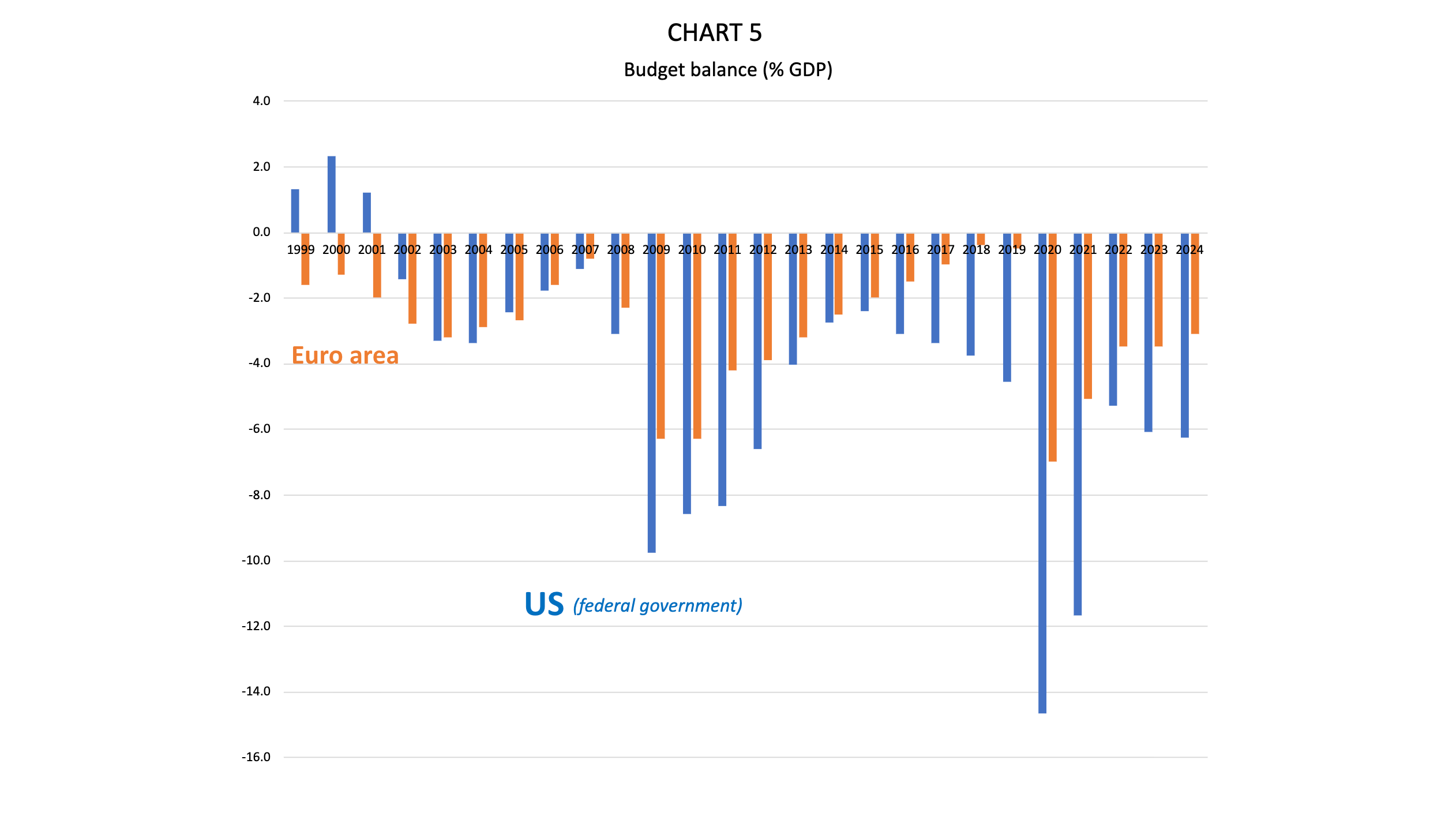
In the US, fiscal policy became far more expansionary after both crises — the financial one and the pandemic — and reacted much faster (Figure 5).

America’s ability to deploy fiscal stimulus rests on a large and flexible federal budget. The euro area’s fragmented national budgets, with varying constraints — especially in countries such as Italy, where high public debt limits room for manoeuvre — make fiscal policy far less effective.

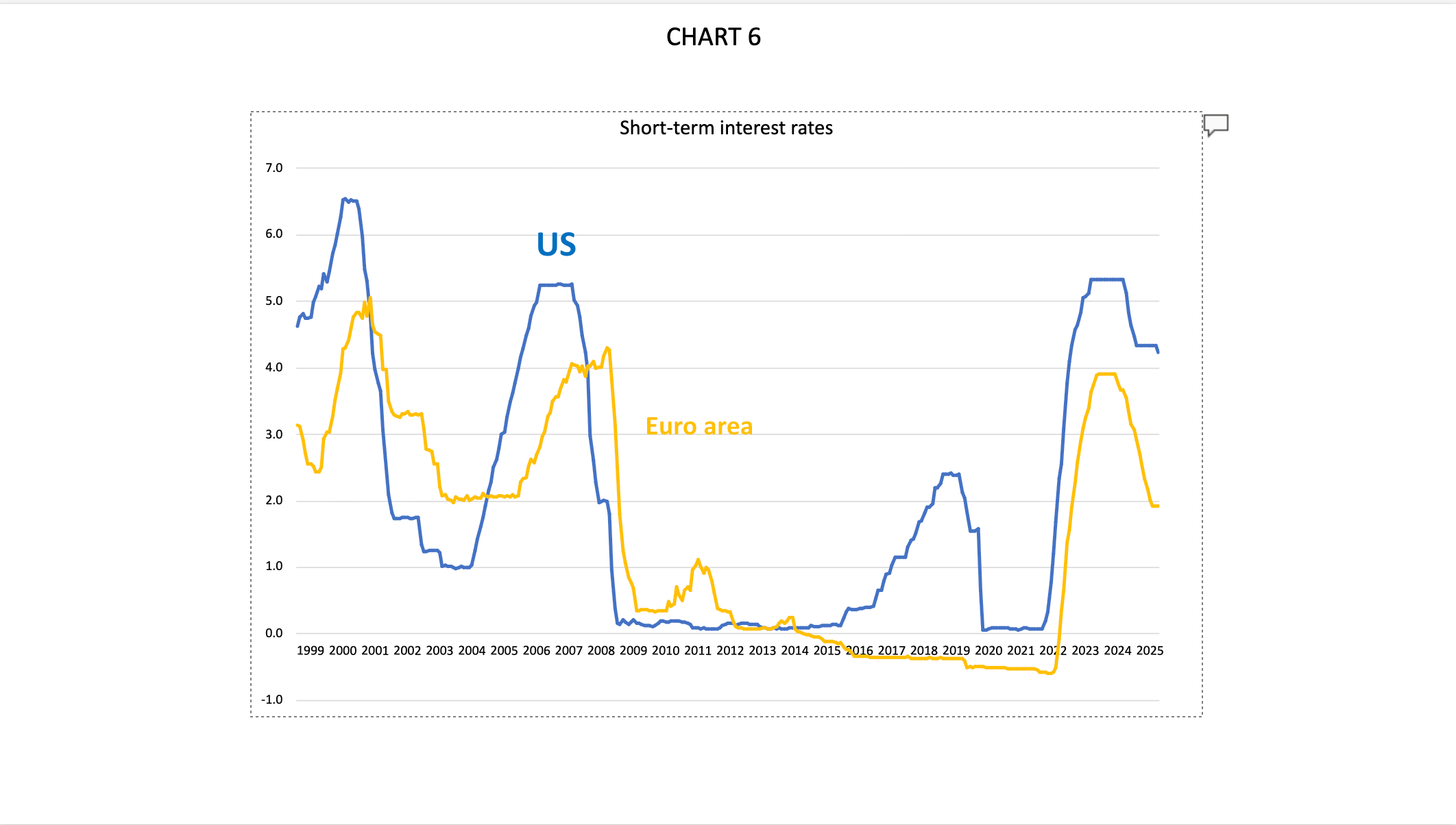
The ECB partly compensated through monetary policy. Between the financial crisis and Covid, the central bank diverged sharply, and unprecedentedly, from the Federal Reserve. Interest rates fell below zero while US rates rose (Figure 6).

In theory, tight fiscal policy combined with ultra-loose monetary policy should have spurred private investment. In practice, the formula only partly worked. Europe’s slower response mechanisms — and the unintended effects of negative rates, maintained for years — limited its impact.

The euro’s “return to origins” thus reflects a mix of factors, but not a random one. In the early years, Europe’s focus on fiscal and monetary stability helped the new currency build credibility. Later, difficulties on both fronts weakened crisis responses and reduced their effectiveness.

The subsequent weakening of the euro would likely have continued beyond 2024, had it not been for Trump’s black swan moment, which has dragged down the dollar.

If someone had told us back then that the euro would retain its value in dollars 27 years later, we would have gladly signed on. But today, the world has changed — and the future is more open than ever.

© Copyright

The Risks of Donald Trump’s Crypto Strategy

IEP@BU

Read on IEP@BU >>

Donald Trump’s executive order on “Strengthening American Leadership in Digital Financial Technology” does more than what the title declares: it launches a process to materially change the way dollar-denominated monetary assets are created, controlled, and used globally. At stake is the position of the Federal Reserve, more precisely, the role that a US president, Woodrow Wilson, who was in many ways polar opposite to Trump, gave to it 111 years ago.  

The ban on issuing a CBDC (Central Bank Digital Currency) is the least surprising part. The new administration’s opposition to it was known. 

The Fed itself, the target of the prohibition, had reservations at least on the “retail” version used for everyday transactions by ordinary people. And for good reasons: a retail CBDC crowds out private payment service providers without clear efficiency gains; it may even jeopardize financial stability. 

Unfortunately, Trump’s prohibition appears to also ban the wholesale version of it, a more interesting proposition. 

The bulk of global cross-border payments stands on weak legs, relying on correspondent accounts among a few global banks. 

Correspondent banking is risky and inefficient because it grants banks a monopoly which they exploit by charging hefty fees on cross-border payment. An internationally connected network of wholesale CBDCs would solve the problem, but it is meaningless without the world’s most important currency, the US dollar. 

Trump’s order therefore kills the solution not just in the US, but globally. 

Conflicting Objectives in Trump’s Economic Strategy. 

More consequential is the part of the order that intends to “promote United States leadership in digital assets”. 

Digital assets are defined here not, as one would think, as those held and exchanged in digital form, but only as those recorded in distributed ledgers. 

In other words, those exchanged without a central authority clearing and settling on its books. This is the function the Federal Reserve has performed ever since it was founded in 1913. 

Still today, virtually all dollar payments eventually settle on the Fed’s balance sheet. The Fed guards the finality and soundness of those payments. This would no longer be the case were large masses of money-like instruments to start circulating on distributed ledgers. 

The administration’s crypto-strategy gives a special emphasis to stablecoins, a relatively obscure instrument pegged to the US dollar, hence money-like. This is surprising. 

Stablecoins are used today mainly to facilitate transactions in and out of more popular crypto instruments such as Bitcoin. Why should an ancillary instrument, with a market capitalization of less than 10% of the overall crypto market, be of such importance?  

One begins to understand this by considering the multiple conflicting objectives of Trump’s economic strategy. 

The first is rebalancing the US external accounts while supporting domestic manufacturing, both of which require a weak dollar and low interest rates. Another one is delivering on the campaign promises regarding trade (read: tariffs) and immigration (border controls and repatriations), both ideologically indispensable but likely to raise inflation. 

Standing in the way is the Federal Reserve, an independent agency mandated to combat inflation by means of high interest rates and a strong dollar. An inconvenience for this administration’s “unitary executive theory” interpretation of its powers. 

The Global Role of the Dollar

A third oft-stated objective is upholding the global role of the dollar, a valuable geostrategic weapon (it provides the basis for financial sanctions) that also helps finance the budget deficit. 

So far the dollar dominance has been unchallenged, but if it begins to depreciate and it returns to decline, that position is no longer assured. 

Trump mentioned punishments – from the imposition of tariffs to the withdrawal of military support – for countries trying to replace the dollar, but threats may not work if the economic calculation doesn’t square.  

Stablecoins are hoped to make this complicated web of incompatible ambitions more consistent. They are a form of dollar-denominated quasi-monetary instruments, added on top of the money supply hence alleviating any undesired monetary policy constraint. 

Their creation is independent of the Federal Reserve and potentially controllable by the executive by means of suitable regulation. They also increase the demand for US Treasuries, because the latter provide the collateral needed to back the stablecoins issuance.  

Regulation will play a crucial role in determining how stablecoins are created and managed. The executive order entrusts the task of writing the rules to a working group controlled by the executive, including all relevant departments and agencies but excluding the Federal Reserve. An exclusion without precedent in comparable cases.  

The US Federal Reserve’s function as guardian of all dollar payments and its independence in performing its monetary role have served America and the globe well for a very long time. This executive order puts that role and that independence at least partly in jeopardy. It is essential that such risk is fully understood and averted. 

© Copyright

Policy Brief – Digital Euro: Catching Up and Browsing the Daisy

IEP@BU

The rationale for introducing an ECB-sponsored digital euro for citizens, retailers, and producers, is not solidly established

Available here >>

For several years now, the ECB has been engaged in preparatory work for the introduction of a central bank digital currency, the digital euro. Its work has advanced our understanding of the complex issues involved and has contributed to a line of research actively pursued in many parts of the world.

After revisiting the pros and cons, this paper concludes that, all in all, the rationale for introducing an ECB-sponsored digital euro for citizens, retailers, and producers, is not solidly established. Today’s highly dynamic, innovative, and efficient digital payment ecosystem does not require such an instrument, which would unavoidably duplicate existing applications and probably struggle to match private innovation.

The paper also offers a short survey of international experiences regarding CBDCs and alternative digital solutions. What strikes in this overview is the extreme diversity of orientations. Developing countries are interested in promoting financial inclusion and literacy, bypassing their lack of developed physical banking networks. Emerging countries either take different directions altogether (Brazil), or experiment with pilot CBDCs (India). China stands out in being fully committed to a digital yuan, clearly – though not explicitly – motivated by internal control and geopolitical expansion. Despite extensive public intervention, however, the e-CNY has not attracted so far much favor among the population, amid fierce competition from private competitors like Alipay and Tencent.

The US Federal Reserve seems inclined to explore wholesale central bank-based digital solutions to improve the efficiency of the international payments system. A retail-based CBDC seems ruled out for the time being. Switzerland, a country whose financial sector has a small but significant international role, has undertaken moves in the same direction.

The ECB has so far placed its bets on a retail CBDC, but in our view would be well advised to pay attention to other options as well. The need to improve the functionality of the international payment system is long-standing and solidly established. 

CBDCs can help in this regard (Adrian, 2023). The ECB should actively join the Fed and other central banks in studying a wholesale, interoperable multi-currency version of CBDC capable of making the international large-value payments more efficient and safer. 

Such an instrument would also have value as a potential backup in case market or technical failures require public intervention. More generally, it is important that in conducting its preparatory work the ECB coordinates with other Western central banks. In a highly interdependent global monetary and financial system, a situation in which the main central banks take markedly different orientations on CBDCs is hardly advisable or even conceivable.

Copyright ©